The Fussy-Eater Compromise: Sneaking Nutrition Into Family Meals Without Cooking 3 Menus
How to weave neglected vegetables like lauki, pumpkin, and spinach into beloved dal, parathas, and idli batters so the whole family eats the exact same dinner with zero complaints.
The Fussy-Eater Compromise: Sneaking Nutrition Into Family Meals Without Cooking 3 Menus - Sneak Vegetables Into Indian Meals
It is 8:00 PM at the Indian dining table, and the nightly negotiation has officially begun. You lift the lid off a steaming bartan of lauki chana dal or palak paneer, and immediately hear three different reactions. Your seven-year-old pushes the katori away because green flecks look suspicious. Your spouse asks if there is any dry aloo sabzi left in the fridge. Meanwhile, your parents need something soft, low-spice, and easy on the stomach. Before you know it, you are standing back over the gas stove making plain butter rotis for one, frying papads for another, and eating cold leftovers yourself.
Running a short-order restaurant out of your home kitchen is exhausting. Yet forcing everyone to eat a plate of boiled gourds only triggers louder family vetoes and untouched morning dabbas returning from school. Learning how to gracefully sneak vegetables into indian meals lets you cook one unified pot of food that satisfies picky palates while quietly delivering real nourishment.
At PlanMeal, we are an Indian home-cooking journal and kitchen companion built around a gentle, realistic belief: cook with what you have, celebrate honest ghar ka khana, and bring a little love to your stove every day. You do not need imported superfoods or three separate menus to keep your household healthy - just clever ways to weave everyday mandi vegetables into the formats your family already loves.
Why Indian Family Tables Turn Into Multi-Menu Battlegrounds
In multi-generational Indian homes, everyone eats together, yet everyone brings different sensory preferences to the plate. Children naturally have sharper taste buds that detect mild bitterness in leafy greens, karela, or bottle gourd. Adults returning from stressful workdays crave bold, comforting textures, while elders prefer familiar, gentle spices.
When vegetables appear as large, recognizable chunks floating in watery gravies, fussy eaters spend half their meal picking them out onto the edge of their thali. The secret to a peaceful healthy family dinner indian style is changing the form and texture of the vegetable rather than fighting over it:
- Disguising Texture Instead of Masking Taste: Most vegetable refusals are about slimy, stringy, or mushy textures (like cooked brinjal, tinda, or bhindi) rather than flavour. Pureeing, grating, or roasting vegetables removes the texture barrier completely.
- Using Beloved Carriers: Every Indian family member already loves soft parathas, crisp dosas, golden tikkis, warm dal tadka, and pav bhaji. When vegetables become part of the dough, batter, or gravy base, nobody feels like they are being forced to eat "diet food."
- Cooking One Base With Smart Table Toppings: Instead of cooking three dishes, you make one nutrient-dense base and customize at the table with a spoon of ghee, roasted papad, pickle, or fresh curd.
7 Clever Ways to Sneak Vegetables Into Indian Meals Every Day
You do not need extra hours in the kitchen to boost your family's vegetable intake. Use these practical, zero-drama techniques with whatever is already sitting in your vegetable crisper tray.
1. Knead Puréed Greens and Gourds Straight Into Roti Atta
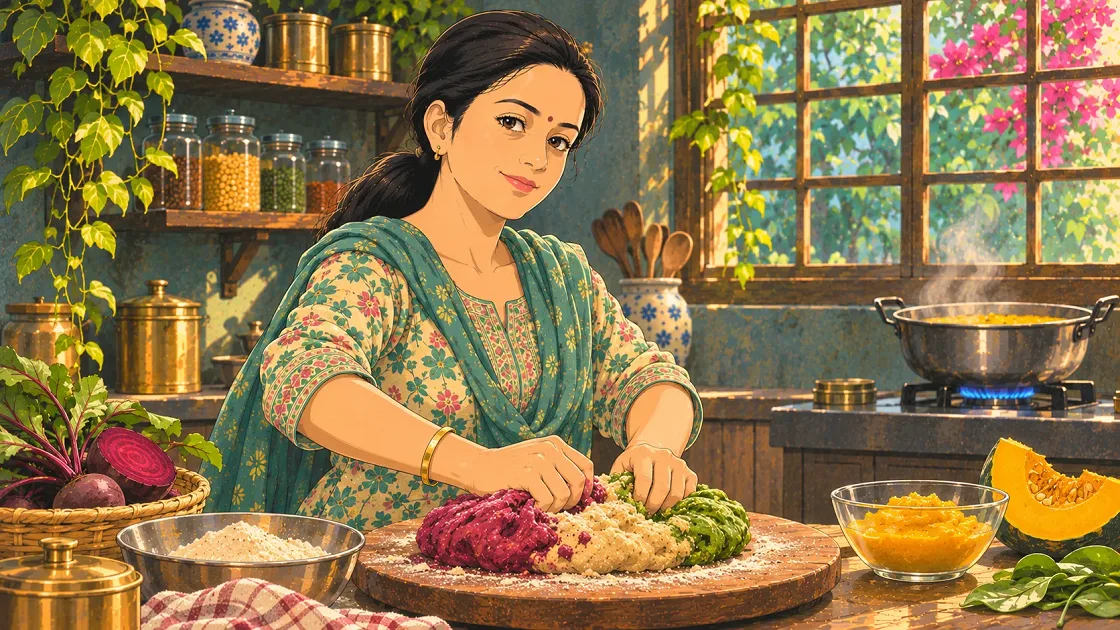
If your family eats rotis or phulkas every single day, your atta bowl is your greatest nutritional ally. Instead of kneading wheat flour with plain water, use blanched, pureed palak, steamed beetroot, grated lauki (bottle gourd), or mashed pumpkin.
- The Colour Appeal: Kids love vibrant pink beetroot rotis or bright green palak phulkas when you call them "rainbow rotis" rather than vegetable rotis.
- Zero Extra Bartans: Grate half a peeled lauki directly into your parat, add whole wheat atta, a pinch of ajwain, haldi, and salt, and knead using the gourd's natural moisture. The resulting rotis stay remarkably soft inside school and office dabbas all day.
2. Master the Stuffed or Blended Hidden Vegetable Paratha
When plain sabzi faces a veto, a crisp, ghee-roasted hidden vegetable paratha almost always wins clean plates. Finely grated vegetables blended with boiled potato or paneer bind together seamlessly so no stray pieces fall out while rolling.
- The Winning Ratio: Combine 1 mashed boiled potato (or 1/2 cup crumbled paneer) with 1 cup finely grated cauliflower, carrot, French beans, and cabbage. Squeeze out excess vegetable water before mixing with roasted jeera powder, amchur, and salt.
- Why It Works: The familiar comfort of aloo or paneer masks the crunch of carrots and beans, turning breakfast or dinner into a complete, balanced meal served with a simple katori of fresh dahi.
3. Blend Boiled Vegetables Directly Into Dal and Sambar
Toor dal, moong dal, and sambar are weekly staples in almost every Indian home. While pressure cooking your dal, toss in diced ash gourd (petha), peeled pumpkin, carrots, tomatoes, or ridge gourd (tori) right into the cooker alongside the lentils.
- Seamless Integration: Once the pressure releases, whisk the cooked vegetables and dal together with a mathani (wooden churner) or hand blender. Pumpkin and carrots melt completely into the dal, giving it a rich, velvety body and natural sweetness without changing its classic tadka flavour.
4. Upgrade Pav Bhaji and Tawa Pulao Into Vegetable Powerhouses
Few dishes unite toddlers, teenagers, and grandparents faster than hot Pav Bhaji or street-style Tawa Pulao. Because the masala is bold, tangy, and mashed smooth, it welcomes almost any vegetable sitting in your fridge leftovers.
- What to Sneak In: Boil beetroot, cauliflower, French beans, capsicum, bottle gourd, and green peas alongside a small potato. Mash them thoroughly with butter and pav bhaji masala. Even the strictest vegetable avoider will happily mop up every last spoonful with toasted whole-wheat pav or chapati rolls.
5. Add Grated Veggies to Breakfast Chilla, Uttapam, and Dosa Batter
Morning tiffin rush is an ideal window for effortless picky eater recipes indian kids actually ask for. Whether you are pouring fermented idli-dosa batter or instant besan-sooji chilla batter onto your tawa, fold in finely grated zucchini, carrot, spinach ribbons, or sweet corn.
- Crispy Edges Win Every Time: Roasting the batter thin on a cast-iron tawa with a few drops of ghee gives crispy golden edges that hide the soft vegetables tucked inside.
6. Use White Gravy Bases Made With Roasted Makhana, Cashews, and Lauki
Rich restaurant gravies rely on heavy cream and cashews, but you can achieve that exact silky texture at home by boiling diced lauki or white pumpkin with onions, ginger, and a handful of cashews or melon seeds. Blend into a smooth paste and simmer paneer, matar, or boiled chickpeas inside it. Nobody at the table will ever guess half the gravy is bottle gourd.
7. Turn Fridge Leftovers Into Golden Baked or Pan-Seared Cutlets
Got a katori of leftover dry cabbage sabzi, mixed beans, or boiled dal from last night? Mash it together with leftover rice or mashed potato, bind with two tablespoons of roasted besan or oats powder, shape into flat tikkis, and pan-sear on a tawa until crisp. Serve tucked inside whole-wheat kathi rolls with mint chutney.
Nutritional Peace of Mind Without Kitchen Burnout
Making small, consistent additions of vegetables across the week adds up far better than occasional forced salads. According to dietary guidelines from the ICMR-National Institute of Nutrition, including diverse colourful vegetables and greens daily provides essential micronutrients, antioxidants, and dietary fibre crucial for growing children and busy adults alike.
A few gentle routines help keep your kitchen calm while feeding diverse palates:
- Keep One Universal Condiments Tray: When cooking mild, kid-friendly meals, place a small tray on the dining table with homemade green chutney, roasted papad, sliced onions with nimbu, and spicy pickle so adults can dial up the heat on their own plates without needing a separate curry.
- Prep Grated Veggies in One Batch: When building an easy weekday dinner menu, grate two carrots and half a beetroot on Sunday afternoon and store them in an airtight box. Having ready-to-mix grated vegetables makes kneading colourful roti dough or stirring up evening chillas a five-minute job.
- Respect Appetite Without Becoming a Short-Order Cook: As child nutrition specialists at Harvard T.H. Chan School of Public Health note, repeated, low-pressure exposure to vegetables within familiar family meals encourages lifelong healthy eating habits much more effectively than mealtime battles.
If you are looking for more grounded, everyday ideas to turn simple mandi vegetables and fridge staples into peaceful family dinners, explore our latest kitchen stories on the PlanMeal blog.
One Pot, One Table, Zero Kitchen Drama
You should never have to cook three separate dinners just to ensure your family eats their vegetables. When you sneak vegetables into indian meals by kneading pureed greens into roti dough, whisking soft gourds into dal, and serving golden hidden-vegetable parathas, everyone shares the exact same warm meal around the table.
At PlanMeal, we believe real home cooking starts from whatever is already waiting in your fridge tray and honours your energy at the end of a busy day. Cook with what you have, enjoy comforting ghar ka khana, and bring a little love to your family table every single day.